The Economy of Trust: A White Paper on Re-Community, Social Capital, and the Future of Human Systems
Modern society is experiencing a crisis of fragmentation.
Communities are dissolving. Institutions are losing trust. Economic systems increasingly reward extraction over contribution. People are more digitally connected than ever before, yet profoundly isolated from one another.
This white paper proposes a different framework for understanding the future of society and economics:
That the most valuable form of capital may not be financial capital at all… but social capital.
Human civilizations have always functioned on trust networks. Long before modern banking systems, contracts, or digital currencies, communities survived through reciprocity, reputation, cooperation, and mutual obligation. Modern systems obscured this reality but never replaced it.

The Missing Ingredient in Social Change Networks
I’ve been reading a series of essays lately about building networks; about how social change leaders must come together, collaborate, cooperate, connect. And that’s absolutely true. I believe it wholeheartedly.
But let me tell you about my experience on the ground.
I belong to many groups of social change leaders. We have Zoom calls weekly; sometimes two or three times a week. We talk about the change we want to see. We talk about what needs to happen and how to make it happen. And honestly? We know what we’re talking about. We’re not amateurs. We’ve been doing this work for years, some of us for decades. Between us, we have an almost encyclopedic knowledge of the issues, the history, the obstacles, the solutions.
So then why isn’t change actually happening? Because there’s a critical ingredient missing from the equation.
The Human Capital Economy
For centuries, societies have become increasingly sophisticated at measuring financial capital. We can track dollars, assets, ownership, debt, investment returns, productivity, consumption, and economic growth with astonishing precision. In fact, entire industries exist to monitor, analyze, and optimize the movement of money. Yet one of the most important forms of wealth remains largely invisible.
Human capital. Social capital. Relational capital. Trust.

Money Is Not Value; a Position Paper
Modern society has become extraordinarily skilled at measuring money and remarkably poor at measuring value.
We track GDP, stock prices, quarterly earnings, productivity metrics, market capitalization, and countless other financial indicators. Entire industries exist to monitor, analyze, and optimize the movement of money. Yet beneath all of these measurements lies a largely unexamined assumption: that money itself is value. This paper challenges that assumption.
Money is not value. Money is a claim on value.

Frameworks for a Better Theory of Change
Modern systems optimized for production and consumption have systematically dismantled the social infrastructure (trust, reciprocity, belonging, mutual obligation) that once made communities strong. And this isn’t a downstream problem. It’s the upstream condition generating loneliness, institutional distrust, political polarization, and chronic dependency on systems that were never designed to replace community. Effective Altruism (EA), begins by asking one question:
Is this problem large, neglected, and tractable?

It’s More than Just “Capacity”
A lot of modern ideology assumes humans are infinitely interchangeable units with equal ability to navigate complexity independently. But lived reality says otherwise.
People vary tremendously in capacity, tenacity, perception, and adaptability. Healthy societies historically compensated for that through community, culture, and layered support structures rather than pretending everyone should operate as isolated hyper-competent individuals.
That reality is highlighted (again and again) in my work on trust, networks, and social infrastructure.
Community is the Foundation
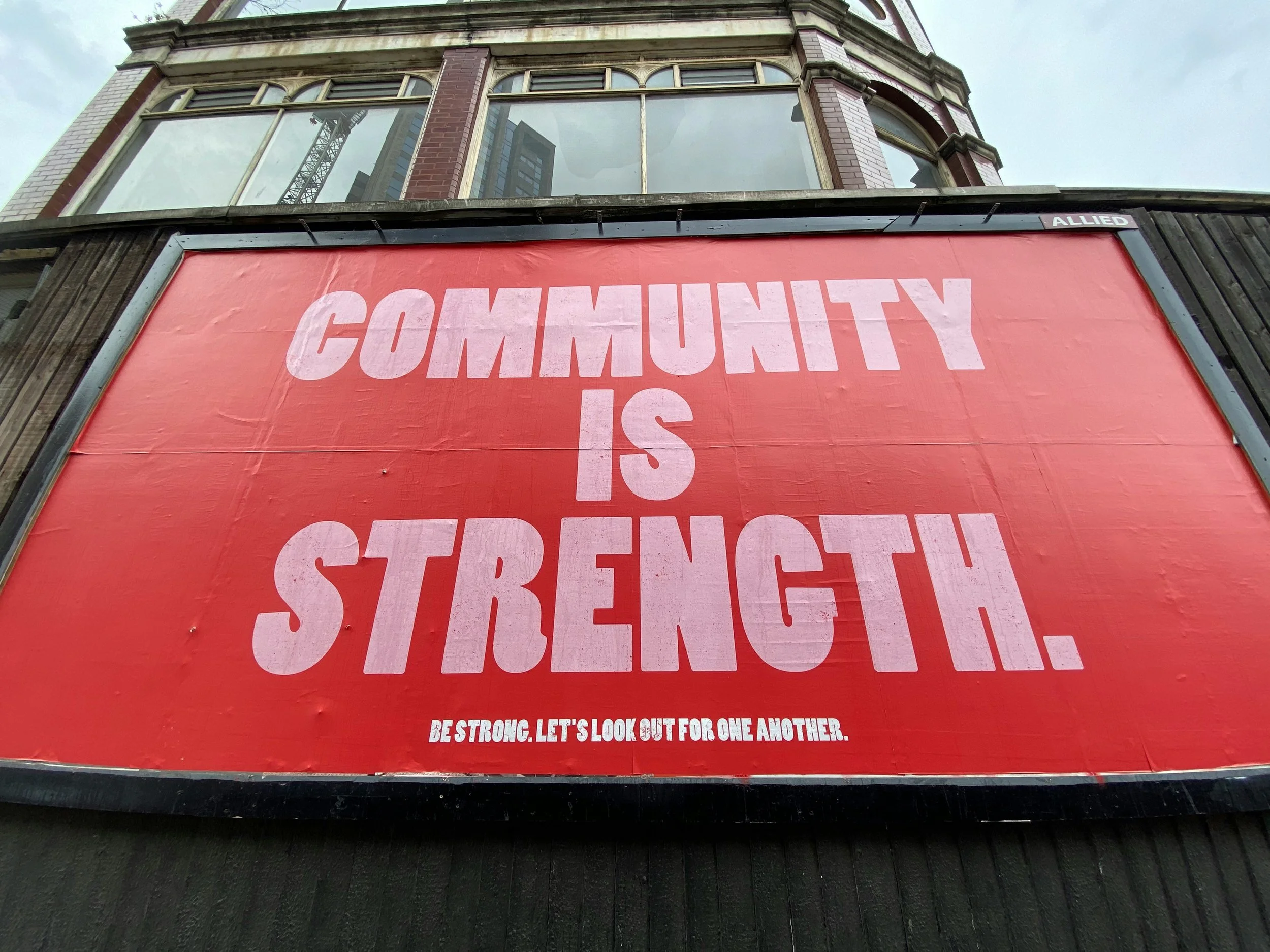
Community is not a byproduct of society. It’s the foundation upon which society is built. And we seem to have gotten that backwards lately.
It seems like many in our society think of community as something optional. A nice thing to have if we can find the time. A social club. A neighborhood association. A church group. A collection of people who happen to share a hobby or a zip code. As if community is an accessory attached to civilization.
I don’t think that’s true at all. I think community comes first.

The Community Memeplex
Much of my work is often described as community building, time co-ops, social capital, trust economies, mutual aid, mutual support, human capital, or social infrastructure. And those descriptions are certainly all true. But, they’re also incomplete.
What I’m really interested in is something larger: a memeplex; a set of interconnected ideas that reinforce one another and gradually change how people understand value, belonging, and society itself.

Tending the Social Garden: living systems have their own agency
“If you can see patterns across systems, connect people across networks, and inspire culture toward a shared purpose, this is your moment in history.”
When someone hears the phrase “systems thinking,” they rightfully imagine organizational charts, bureaucracies, governance structures, and institutional design. And that certainly is a form of systems thinking…
but it’s only one branch.

The Real Work is Stewardship
For many years, I believed my work was about changing things. I believed the challenge was to build better systems, create stronger networks, develop new models of value, and help communities rediscover their capacity to care for one another.
I still believe those things matter. Systems matter. Networks matter. Ideas matter. Yet over time I have come to see that they’re not the destination. They’re merely tools.
The real work is stewardship.

Which Came First, the Chicken or the Egg? Really?
When we encounter someone living in chronic need, there’s often an unspoken question lingering beneath the surface. How much of their situation was caused by their choices? And how much of their choices were caused by their situation?
It’s the social equivalent of asking which came first: the chicken or the egg.
People often divide themselves into camps. One group focuses on personal responsibility. They see bad decisions leading to bad outcomes. Poor financial choices lead to debt. Addiction leads to instability. Failed relationships lead to isolation. Looking at the world through this lens, the solution seems straightforward: make better choices. Right?
Another group focuses on circumstances. They see trauma, poverty, illness, discrimination, broken families, underfunded schools, and neighborhoods with limited opportunities. Looking through this lens, poor choices often appear less like moral failings and more like predictable responses to difficult conditions. Right?

Malthus Wasn’t Really Writing About Population
Thomas Malthus is remembered as the man who believed there were simply too many people. That’s the shorthand version anyway. I think his actual idea was more impactful than that.
Writing in 1798, Malthus observed that populations have a tendency to grow faster than the resources available to sustain them. Left entirely to themselves, he argued, they eventually run into limits. Food becomes scarce. Disease spreads. Conflict increases. Famine follows. Then, inevitably, nature restores the balance whether humanity likes it or not.
The One Resource That Grows When You Share It
Thomas Malthus believed humanity would eventually run into the hard limits of the natural world. And he wasn’t wrong. Clearly, every physical resource has a limit. Water. Land. Timber. Oil. Even time. Use enough of any finite resource and eventually you’ll discover where its boundary lies.
And, believe-you-me, nature keeps careful accounts.
But I’ve been wondering if we’ve spent the past two centuries arguing about the wrong thing. The real question isn’t whether resources are finite. Of course they are. The better question is: are all forms of wealth finite?
And I don’t think they are!

New Insights on Capacity
I’ve spent much of my career thinking I was trying to solve problems. Whether they be… Poverty. Homelessness. Healthcare. Food insecurity. Community. And those are indeed worthy problems; they deserve our attention. But lately I’ve begun to wonder if they aren’t the real subject of my work.
Perhaps the deeper question is capacity.
Why do some people thrive after a setback while others never recover? Why do some neighborhoods seem to solve problems almost instinctively while others remain trapped in cycles of crisis? Why do some organizations accomplish extraordinary things with limited resources while others struggle despite having every advantage? The answer is rarely a single program or a single policy. I think it’s…
Capacity!
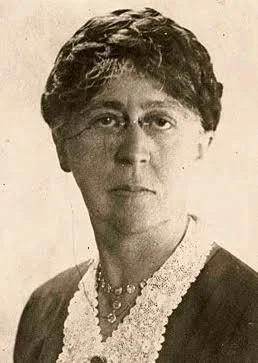
Mary Parker Follett: Her Ideas Still Matter
The purpose of leadership is not to direct people, but to create the conditions under which people can discover and exercise their collective power… to paraphrase her work.
Mary Parket Follet seems to become more relevant with every passing decade.
She wrote in the early twentieth century, yet many of the ideas people celebrate today (systems thinking, collaboration, collective intelligence, network leadership, community engagement, and participatory decision-making) can be found in her work long before they became fashionable.
In her work, she clearly understood something many people still struggle to grasp: people are not problems to be managed. Communities are not machines to be controlled. Human beings exist within living systems of relationships.
That insight inspires much of my own work.