
How Nonprofits Became Corporate Puppets
These day, my life revolves around nonprofit work. So when I say that there’s something terribly wrong with the way nonprofits are funded, I’m speaking about a world that I’m very much a part of.
There are plenty of good organizations. People doing difficult and very necessary work. People who know their communities, understand the problems, and push forward, even when there’s barely enough money to keep the doors open.
And then there are organizations that seem to have no difficulty getting funded, though it can be remarkably difficult to figure out what they’ve actually accomplished. Often times actually, the better funded the organization, the harder it is to figure out what they do just by looking at their website.
And I think it’s time to debunk the common belief that money naturally finds its way to the people doing the most good.
Because it doesn’t. I mean… it REALLY doesn’t.
The Organization Is the Grant Proposal
I recently met with two city officials whose work is to manage housing precarity and homelessness in both the city and the county. And I had plenty of reasons to ask them for funding. Several new programs, in fact. But that wasn’t the meeting I was there to have.
I wanted to understand the problem as they saw it, and to explain what our organization had built in response to a part of it. Maybe a partnership would come from that conversation. Maybe funding would. I didn’t yet know. But I knew something else…
An organization shouldn’t simply ask for funding. It should offer solutions.

Relational Wealth; How Wealthy Are You?
Economists have a bizarrely unrealistic little character called homo economicus. He has all the necessary information, carefully weighs every possible choice, and then makes the decision that will maximize his benefit. He is rational. He is calculating. He knows what he wants and how to get it.
He also is nothing like the average human being.
Of course, homo economicus is a model. A simplified version of human behavior intended to explain how people make economic decisions. But the problem with models is that they become assumptions. Then principles. Then “absolute truth.”
And I think the “absolute truth” that the capitalist system (and I don’t mean to necessarily demonize capitalism) has socialized us and “educated” us to believe is that; material gain is what defines wealth.
And we’ve created an entire culture around this misguided formula. But, I contend that relationships are what define true wealth.

Are You Compassionate?
“Most people trust that the compassion they feel for others will be acted upon by someone else, while they sit at home congratulating themselves for having felt it.”
Compassion.
We often think very highly of ourselves for feeling it. We see someone suffering. We feel bad. We shake our heads. Maybe we say something about how terrible it is. Maybe we tell someone else how terrible it is. And, having properly registered our concern, we go about our day.
Compassion accomplished. Right? I mean, if we’ve made a show of it, isn’t that as good as doing something? Except, of course, nothing has actually happened. The hungry person is still hungry. The lonely person is still lonely. The family facing eviction is still facing eviction. The old man still needs a ride to the doctor. But, hey, we cared. Or pretended to. And caring feels kind of like doing.
But it isn’t.

Social Market Economy integrated with a Negative Income Tax (NIT)
Ultimately, the real question we’re left struggling with is how do we build an economy that distributes power widely enough that people can actually participate in it.
Markets can distribute economic decision-making. A Negative Income Tax can provide enough stability that people aren’t forced to make every decision from desperation. Communities can provide the relationships, trust, and mutual support that neither markets nor governments are particularly good at creating. And government can establish the rules that keep any one of those systems from swallowing the others.
None of them has to do everything. Maybe that’s the point. A healthy economy shouldn’t require us to choose between freedom and security. It should give us enough security to actually be free.

Needs Cannot Be Reduced to Mere Categories: Why Reductionist Systems Fail
I would argue that top-down systems are unnatural, ineffective, and inefficient. That only a bottom-up system can be efficient and effective because it originates from where the need actually is.
Doesn’t this seem reasonable?
If decisions are made at the top, they’re too out of touch with actual need, and they end up dictating some contrived idea of what needs should be; which is never anywhere close to what the need actually is. Systems must originate from the same point that the need exists.
Only then can they be efficient and effective.

Buridan’s Ass: Precarity is So Much More Than Just Scarcity
There’s an old philosophical thought experiment called Buridan’s Ass. Basically, there’s a donkey standing between food and water. He’s hungry and he’s thirsty. If he walks toward the food, he’s walking farther away from the water. If he walks toward the water, he’s walking farther away from the food. So he stands there, paralyzed by indecision (lack of capacity). And eventually dies. The point of the story is usually to illustrate the problem of rational choice. If two competing choices are equally compelling, and there’s no rational way to determine which one should take priority, you can become stuck between them.
I think about this alot because I see a version of Buridan’s ass every day at the community resource center. Except instead of food and water, it’s rent and electricity. Or food and gasoline. Or medicine and groceries. Or going to work and staying home with a sick child. And, unlike the donkey, people usually have considerably more than two buckets sitting around them. There might be six. The rent is due Friday. The electric company has sent a disconnect notice. The refrigerator is empty. The car needs a repair. One of the kids needs new shoes for school. And the job that supposedly makes it possible to pay for all of this requires the car that is no longer functioning.
So, pick one.

From Precarity to Participation
The pattern emerging at West Avenue Compassion’s Community Resource Center is becoming increasingly difficult to ignore. Requests for rent assistance, utility assistance, and food have become the dominant needs presented by families. Healthcare, once among the most urgent concerns, has moved into a somewhat distant second place. This does not mean that healthcare needs have diminished. It means that housing, electricity, water, and food have become so uncertain that they are consuming nearly all of the attention available to families experiencing economic hardship.
This shift represents more than an increase in poverty. It signals a deterioration of community capacity: the practical ability of people, organizations, relationships, and local institutions to identify problems, mobilize resources, make decisions, and act together.
Community capacity depends on participation, leadership, knowledge, relationships, communication, resources, problem-solving ability, and some shared belief that collective action can make a difference. Research on community capacity consistently identifies these elements as essential to a community’s ability to respond to social and public-health challenges.

KommunityKoin as an Adaptive Cohousing System: Rebuilding Community Within the Neighborhoods People Already Call Home
Cohousing has emerged as a promising response to social isolation, population aging, caregiver strain, housing insecurity, and the weakening of neighborhood relationships. Conventional cohousing communities combine private residences with shared spaces, resident participation, and intentional systems of mutual support. Although this model offers substantial social benefits, purpose-built cohousing frequently requires land acquisition, construction financing, residential relocation, professional development expertise, and the economic capacity to purchase or rent within a specialized community.
This paper argues that KommunityKoin offers an ideal framework for expanding the underlying principles of cohousing beyond purpose-built developments.

When the System Fails, People Build Their Own: Understanding the Rise of Micro-Economies
Many people might assume that a “micro-economy” is just microeconomics with a hyphen. It’s a reasonable guess, but it’s wrong.
Microeconomics is a field of study. It’s the academic perspective economists use to examine how individuals, households, and firms respond to prices, incentives, and scarce resources within specific markets. It’s taught in classrooms, modeled with graphs, and tested against real-world data to see whether the theory holds up.
A micro-economy, on the other hand, is something else entirely. It’s not a theory. It’s life in action. A real, functioning, closed-loop economic system operating at a tiny scale; often invisible to anyone outside of it. A prison economy built around commissary goods, a neighborhood barter club, a Local Exchange Trading System (LETS), or a tight-knit community where favors and reputation matter more than cash. These are real-life cases of survival systems, built by ordinary people who ran out of other options.

What the Village Movement Can Teach the Time Banking Movement (And Vice Versa)
Over the past two decades, the Village Movement has demonstrated something that many community movements struggle to achieve: consistent participation.
Across the United States, hundreds of Village organizations have helped older adults remain independent by connecting neighbors, coordinating volunteers, and strengthening local relationships. While each Village reflects the character of its own community, they all share a common belief that people are often the greatest resource a community possesses.
That idea should sound familiar to anyone involved in Time Banking. Both movements begin with the same underlying concept: our greatest wealth isn’t found in money. It’s found in people. And healthy communities emerge when neighbors know one another, trust one another, and are willing to help one another.

We Can’t Build Communities: You’ll See Why.
It’s taken a long time but I’m beginning to think that communities aren’t built. Organizations are built. But communities.. they emerge. That may seem like a small distinction, but I think it changes almost everything in the community game.
When we say we’re building a community, we often imagine ourselves as engineers. We design structures. We create programs. We establish committees. We develop strategic plans. We organize volunteers. We raise money. We construct organizations because; organizations are things that people can intentionally create. But communities don’t really work that way. A community isn’t a structure. It’s a living system. And like every living system, it grows from within.
No one has ever designed trust. No one has ever written a policy that creates belonging. No one has ever held a meeting that produces culture. These things arise from relationships.
They emerge.

Context Collapse: Why We're Losing the Story Behind the Story
One of the greatest challenges of our time isn’t misinformation, per se. It’s missing information. More specifically, it’s missing context. A single sentence can circle the globe in seconds. A quote can be copied, reposted, summarized by AI, or turned into a headline before anyone has the opportunity to understand where it came from or what it was intended to mean. We have become remarkably good at moving information and remarkably poor at carrying the context that gives it meaning.
Sociologists call this context collapse. It originally described what happens when all of our social worlds suddenly merge together. A joke intended for close friends is read by strangers. A conversation meant for colleagues is interpreted by family members. The audience changes, but the words do not. Suddenly, everyone is listening through a different set of assumptions. This is our world dominated by social media. But I think this goes much further than what we say on social media.
Ideas experience context collapse, too.

Solving Precarity Requires Two Things, Not One
A negative income tax alone can't solve precarity, because precarity is multidimensional. People can have identical incomes and radically different levels of security depending on whether they have a network to draw on.
Economic support removes the constant emergency of survival and frees up capacity. Social infrastructure converts that capacity into trust, mutual aid, and opportunity. The two are not competing fixes but complementary inputs; one solves the resource problem, the other solves the relationship problem, and neither works at full strength without the other.
For generations, we've tried to solve precarity primarily through economics: how much money people need, how benefits should be distributed, which program should be expanded. These are important questions. But money alone has never been enough.

Grounded Theory and Iterative Learning: How Understanding Emerges From the Work
Grounded theory is a qualitative research methodology in which theory develops through the ongoing collection and analysis of evidence. Its process is iterative: researchers move repeatedly between observation, interpretation, comparison, and further inquiry. Each discovery influences what they study next.
This paper examines iterative learning as a method for understanding communities and developing bottom-up social infrastructure. It also explores how this logic relates to the River Stephens Framework, particularly its emphasis on trust, participation, culture, networks, and systems.
Communities are complex and constantly changing. Understanding them requires a process capable of learning from reality as it unfolds.
An Academic Overview of the Bottom-up Social Infrastructure Framework
I asked RiverGPT to explain my framework to a PhD economist. Here's the response:
If I were speaking to a PhD economist, I would present River's work less as an alternative economic theory and more as an attempt to expand the production function by treating social capital, trust, participation, and community capacity as primary productive assets rather than secondary social outcomes.
I think River’s framework has matured to the point where it can be discussed alongside established academic traditions rather than only as community-development philosophy.
Its strength isn’t that every individual idea is novel—trust, social capital, commons governance, and institutional economics are all well-developed literatures. Its distinctive contribution is the synthesis.
Bottom-Up Social Infrastructure
Why do some neighborhoods become thriving communities while others remain collections of strangers?
Traditional explanations emphasize geography, economics, institutions, or public investment. Each contributes to community life, yet none fully explains why people who live side by side sometimes develop deep networks of mutual trust while similar neighborhoods do not.
This paper proposes the Theory of Intentional Social Emergence.
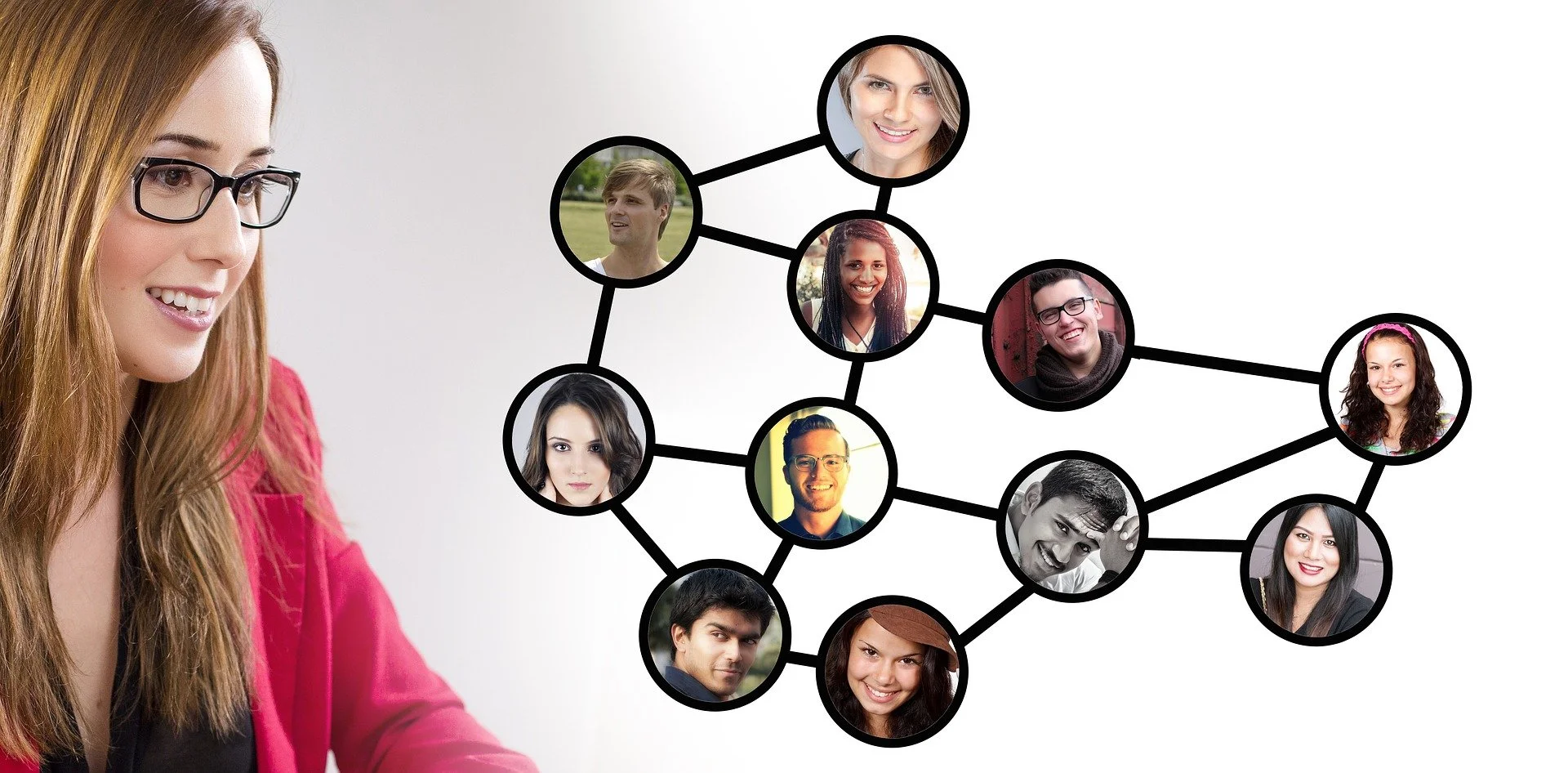
The theory suggests that community is an emergent property of human relationships organized around shared intention. Neighborhoods possess the latent capacity for community. That capacity becomes realized as people intentionally direct their attention toward one another through shared purpose, repeated participation, and reciprocal acts of care.
Relationships emerge. Trust accumulates. Cooperation expands. Over time, these interactions create resilient social infrastructure capable of solving increasingly complex problems.
Community, therefore, is neither primarily geographic nor institutional.
It’s relational.

A Closer Look at Precarity
This article (an important read) argues that precarity is much more than unstable employment. It’s a way of understanding how insecurity is produced, experienced, and distributed throughout society. Rather than being simply an unfortunate byproduct of modern economies, precarity has become a central feature of contemporary capitalism and an important concept in anthropology.
Here are the main ideas:

The New Infrastructure for a New World
The last few weeks in our community resource center, we’ve run up against the stark reality of our days.
Now, for this to make sense, you have to understand a little bit about what we do. Members of the community come into our center to access whatever resources might be available to help them get through daily life. Food. Clothing. Housing. Healthcare. Utility assistance. Employment. Childcare. Transportation. Whatever it is they need, our job is to help them find it. We have rack after rack of flyers. We maintain a website with more than 12,000 resources. We have case managers who spend their hours sitting with people, listening to their stories, and helping them navigate what seems like an endless maze of programs and organizations.
From the outside, it looks like abundance. But here’s the problem. Our case managers keep running into the same wall. As they’re trying to help someone access the resources they desperately need, they’re hearing the same sentences over and over again.
“We’ve run out of funding for the year.” “We don’t offer that service anymore.” “Our waiting list is full.” “You’ll have to try another organization.”

Is My Website Doing its Job?
Over the past few years, my thinking about websites has changed quite a bit. I used to think the job of a website was to explain everything an organization does. Now I think that's exactly the wrong approach.
The purpose of a website isn't to explain everything. Its purpose is to create understanding. There's a difference. Up until now, we've treated websites like digital brochures, trying to fit every possible detail onto the homepage. We tell our entire story at once. We list every service, every credential, every accomplishment, every feature, every benefit. We assume that if people know more, they'll trust us more.
Instead, they often leave confused.
People don't arrive at a website hoping to read everything you've written. They arrive because they have a question they want answered. If they find that answer quickly, they'll keep exploring. If they don't… they'll leave.
The homepage has a remarkably simple job. It needs to answer three questions well enough that someone immediately knows they're in the right place.