
Malthus Wasn’t Really Writing About Population
Thomas Malthus is remembered as the man who believed there were simply too many people. That’s the shorthand version anyway. I think his actual idea was more impactful than that.
Writing in 1798, Malthus observed that populations have a tendency to grow faster than the resources available to sustain them. Left entirely to themselves, he argued, they eventually run into limits. Food becomes scarce. Disease spreads. Conflict increases. Famine follows. Then, inevitably, nature restores the balance whether humanity likes it or not.

The One Resource That Grows When You Share It
Thomas Malthus believed humanity would eventually run into the hard limits of the natural world. And he wasn’t wrong. Clearly, every physical resource has a limit. Water. Land. Timber. Oil. Even time. Use enough of any finite resource and eventually you’ll discover where its boundary lies.
And, believe-you-me, nature keeps careful accounts.
But I’ve been wondering if we’ve spent the past two centuries arguing about the wrong thing. The real question isn’t whether resources are finite. Of course they are. The better question is: are all forms of wealth finite?
And I don’t think they are!

New Insights on Capacity
I’ve spent much of my career thinking I was trying to solve problems. Whether they be… Poverty. Homelessness. Healthcare. Food insecurity. Community. And those are indeed worthy problems; they deserve our attention. But lately I’ve begun to wonder if they aren’t the real subject of my work.
Perhaps the deeper question is capacity.
Why do some people thrive after a setback while others never recover? Why do some neighborhoods seem to solve problems almost instinctively while others remain trapped in cycles of crisis? Why do some organizations accomplish extraordinary things with limited resources while others struggle despite having every advantage? The answer is rarely a single program or a single policy. I think it’s…
Capacity!
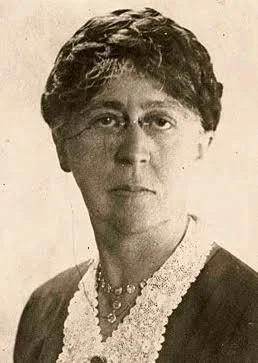
Mary Parker Follett: Her Ideas Still Matter
The purpose of leadership is not to direct people, but to create the conditions under which people can discover and exercise their collective power… to paraphrase her work.
Mary Parket Follet seems to become more relevant with every passing decade.
She wrote in the early twentieth century, yet many of the ideas people celebrate today (systems thinking, collaboration, collective intelligence, network leadership, community engagement, and participatory decision-making) can be found in her work long before they became fashionable.
In her work, she clearly understood something many people still struggle to grasp: people are not problems to be managed. Communities are not machines to be controlled. Human beings exist within living systems of relationships.
That insight inspires much of my own work.